78 2ND HOUSE RD MONTAUK, NY, 11954
CONTACT@SILKROAD-PHARMACY.COM- No products in the cart.
How to Spot a Fake Medicine: The Five-Point Authenticity Check
How to Spot a Fake Medicine: Start With Five Checks
A fake medicine can be spotted before you take it by checking five things in order: the packaging and print quality, the seals and tamper evidence, the batch number and expiry date, the appearance of the medicine itself against the known genuine product, and the leaflet and paperwork. A genuine pack passes all five checks cleanly. A pack that fails even one should not be taken until a pharmacist has verified it. These checks take a few minutes, need no special equipment, and work for tablets, capsules, injections, and most other forms.
Counterfeit medicines are a real problem in online buying, which is why a calm, repeatable check matters more than guesswork. This guide explains where fakes come from, walks through the check step by step, describes the forms fakes take, and sets out what to do if something looks wrong. Keep the pack, leaflet, and receipt together while you check.
How Fakes Reach Buyers and Why the Checks Work
Fake medicines reach buyers through weak points in the supply chain. Some are made in unlicensed premises and sold through websites with no pharmacist, no address, and no accountability. Others enter through diverted or stolen stock, relabeled expired products, or wholesalers who do not verify their sources. Social media and marketplace sellers with no verifiable business behind them are another common route. In each case, the seller is betting the buyer will never look closely.
Genuine medicines move differently. They are made in licensed facilities, released batch by batch with testing, and distributed through a documented chain where each step can be traced. That traceability leaves visible evidence on the pack: consistent printing, intact seals, a real batch identity, and a correct leaflet. Counterfeiters can copy the general look of a box, but copying every detail consistently is much harder. Mistakes cluster: a spelling error appears alongside a slightly wrong color, or a batch number is printed in a way the genuine maker never uses.
That is why the checks work as a set. One slightly faded carton might be innocent wear. A faded carton plus a loose seal plus a leaflet in the wrong language is a pattern no genuine pharmacy should ask you to accept. Run all five checks and judge the whole picture, rather than explaining away each problem on its own.
When to Run the Check
Run the full five-point check on every first order from any supplier, without exception. A first delivery is your only chance to judge a new source before trust is assumed, and a seller who sends a correct, verifiable first pack has passed the most important test there is. Take the few minutes while everything is still sealed.
Run it again with every new supplier, even if the medicine is familiar. The same brand and strength can be genuine from one source and counterfeit from another, because authenticity belongs to the individual pack and its supply chain, not just to the product name. The more genuine packs you have handled, the faster an unfamiliar detail stands out.
Run it again on any pack that looks off, even from a supplier you trust. A different carton shade, a seal that feels different, or tablets that look slightly changed are all valid triggers. A good supplier would rather you asked than stayed silent. Our explainer on GLP-1 weight loss medicines follows the same principle: understand the genuine product first, then judge what arrives against it.
The Five-Point Authenticity Check, Step by Step
Work through the five checks in order, with the unopened pack in front of you and, if possible, a previous genuine pack to compare against. Do not take any of the medicine until all five checks are complete. If a check cannot be completed because information is missing, treat that as a failed check, not a passed one.
- Packaging and print quality — crisp, consistent, spelled correctly.
- Seals and tamper evidence — intact, unglued, unmarked.
- Batch number and expiry — matching on carton, container and leaflet.
- Appearance — colour, shape and markings as genuine.
- Leaflet and paperwork — present, correct language, right medicine.
Check 1: Packaging and print quality
Look at the outer carton slowly, on every side. Genuine pharmaceutical printing is sharp, evenly colored, and precisely aligned. Text should be crisp, with no blurred edges, no spelling mistakes, and no awkward phrasing. Colors should match the genuine product's known design, including the placement of logos, warnings, and the barcode. The product name, strength, quantity, and manufacturer should all be present and consistent. Blurry print, crooked labels, washed-out colors, and glue where a factory finish should be are warning signs. Photograph anything unusual before opening the pack.
Check 2: Seals and tamper evidence
Examine every seal before breaking it. Most genuine packs carry tamper-evident features such as sealed carton ends, a foil seal over a bottle opening, shrink wrap, or a perforated strip. A genuine seal sits flat, is fully attached, and shows no sign of having been lifted and stuck back down. Look for wrinkles, bubbles, residue, or an edge that lifts too easily. Blister strips should be fully sealed around each tablet pocket, with no punctures. If tamper evidence looks disturbed, stop. That pack's history cannot be trusted.
Check 3: Batch number and expiry consistency
Find the batch or lot number and the expiry date, then check them in every place they appear. On most products they are printed on the outer carton and repeated on the inner container, blister, vial, or pen label. Every instance must match exactly. The expiry date must be in date, clearly readable, and printed in the same process as the rest of the pack, not added with a loose sticker that could hide an earlier date. A batch number that differs between carton and contents, or a scratched or overprinted expiry, is a serious failure. Record both numbers with your order details: they are how a pharmacy traces a pack.
Check 4: The appearance of the medicine itself
Only after the first three checks, look at the medicine itself, without taking any. Compare its color, shape, size, coating, and markings with the known genuine product, from a previous genuine pack or the manufacturer's information. Genuine tablets are uniform: each one in a strip should match the others in color and finish, and any scored line, imprint, or logo should be clean and identical. Capsules should be evenly filled and undamaged. Liquids should have the clarity the leaflet describes, with no unexpected particles. Chalky edges, uneven color, or a strong unusual smell are reasons to stop and seek verification.
Check 5: The leaflet and paperwork
Finally, read the patient leaflet. A genuine pack includes the correct leaflet for that exact product and strength, in the language of the market it was made for, neatly folded and clearly printed. Check that the medicine name, strength, and manufacturer on the leaflet match the carton, and that it covers uses, cautions, and side effects in proper detail. A missing leaflet, a leaflet for a different product, or a poor photocopy is a failure. Keep your order confirmation with the pack too, so any problem can be traced.
The Forms Fakes Take
Fakes do not all look crude. The simplest form is loose tablets or capsules sold with no carton at all, in a plain bag or bottle, with no batch number, no expiry, and no leaflet. Without packaging there is nothing to verify, and that alone is reason enough not to take them. No genuine pharmacy supplies medicines loose and undocumented in this way.
The more deceptive form is the copied box. The carton imitates a well-known brand closely enough to pass a glance, but close inspection finds the faults described in check 1: slightly wrong colors, softer print, small spelling errors, and a barcode that may not scan. The contents may be look-alike tablets made to match the genuine product's shape and color while containing something entirely different.
A third form pairs genuine-looking packaging with the wrong insides: the wrong leaflet, blisters from a different strength, or refilled containers carrying copied batch details. This is why the check insists on consistency across all five points rather than trusting any single feature, a point our comparison of PDE5 inhibitors also makes about genuine presentations. One detail may deceive. Five consistent details are far harder to fake.
The Health Risks of Fake Medicines
The risks of a fake medicine are not theoretical. The most common problem is the wrong dose. A counterfeit tablet may contain too little of the active ingredient, so the condition goes untreated while the patient believes it is being managed. For infections, blood pressure, diabetes, and many other conditions, silent undertreatment lets the illness progress, sometimes to a point that is much harder to reverse.
The opposite problem is just as dangerous. Some fakes contain too much active ingredient, or a different, stronger drug substituted for the labeled one. That can cause overdose effects, dangerous interactions with other medicines, and allergic reactions to undeclared ingredients. Because the label is false, a treating doctor may not know what was actually taken, which delays the right emergency care.
Contamination is the third risk. Products made in unlicensed premises have been found to contain industrial chemicals, heavy metals, incorrect fillers, and microbial contamination, particularly in fake injections where sterility matters most. A product with no active ingredient at all completes the picture: the patient swallows an unknown substance and receives none of the benefit. There is no safe way to test a suspect pack by taking a small amount first. The only safe response to a failed check is not to take it at all.
Storing Packs So They Stay Checkable
Good storage is part of authenticity, because a pack you can still read is a pack you can still verify. Keep medicines in their original cartons, with the leaflet folded inside, until the course is finished. The carton carries the batch number and expiry date, and separating tablets from it destroys the link between the medicine and its identity. If you use a pill organizer, keep the original pack nearby.
Store packs as their labels direct, in a cool, dry place away from bathroom steam, sunlight, and heat, with refrigerated items kept in the refrigerator. Heat and moisture fade printing, loosen seals, and degrade both genuine medicines and the evidence printed on them. Keep different products separate, and never combine leftovers from different batches in one bottle.
Keep order confirmations for at least as long as you hold the medicine. If a question arises weeks later, a batch number without an order record is far harder to trace. Photographing the carton, batch, and expiry of each new delivery, before first use, takes seconds and preserves every detail the check depends on.
How a Genuine Pharmacy Behaves: Spotting Genuine Stock
The five checks judge a pack. This final section judges the seller, because genuine stock comes from genuine behavior. A real pharmacy identifies itself clearly, with a business name, contact details, and pharmacists who answer questions in plain language. It asks appropriate health questions where a medicine requires them, checks prescriptions where they apply, and refuses an unsafe sale rather than completing it quietly. Its packs arrive sealed, labeled, and documented, with matching batch and expiry details.
A seller to avoid behaves in the opposite way: no verifiable identity, no questions asked, pressure to buy quickly, and packs that arrive loose or undocumented. Price alone never proves authenticity, but a seller who discourages checking is telling you something important. In short, genuine stock is sealed, traceable, correctly documented, and supplied by a pharmacy that welcomes verification, which is exactly the standard described on our genuine stock page.
Ordering Note
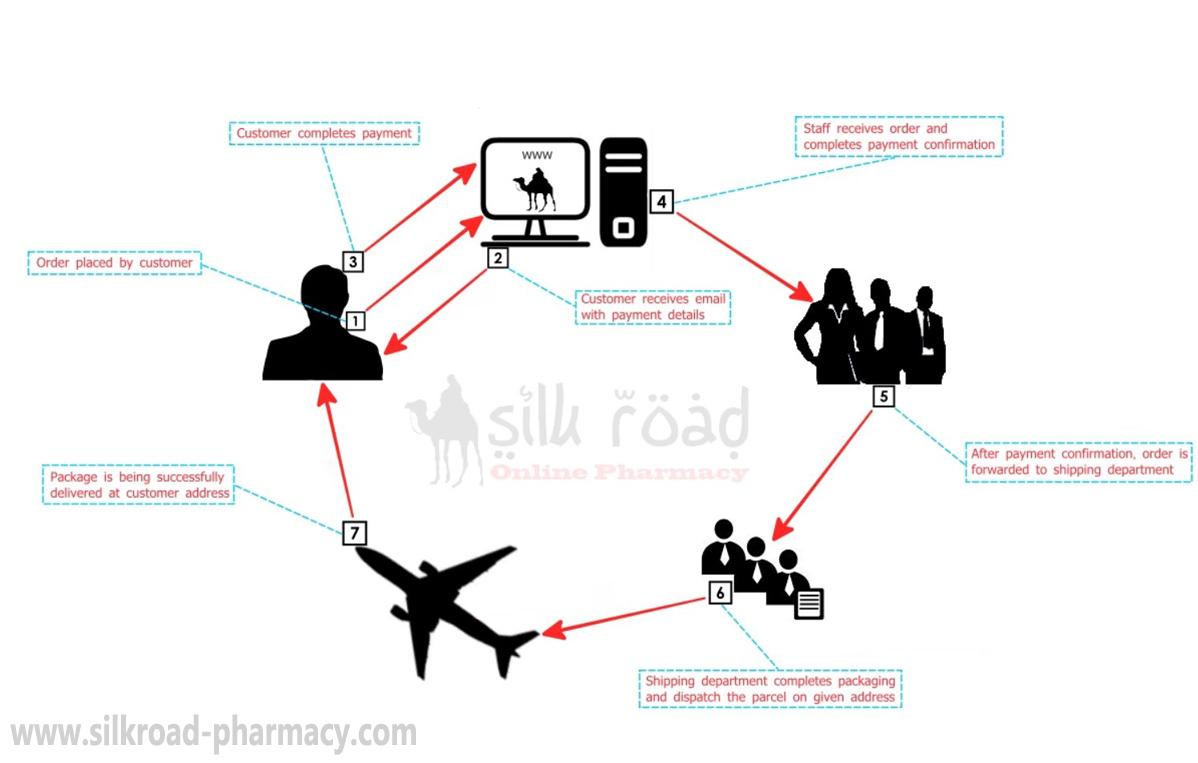
When you order through this website, your order is placed online first. If a prescription is required for an item in your order, our team requests it and checks it by email before dispatch, and will write to the email address on your order if anything else is needed. Nothing in that process is skipped, so please respond to any such email promptly.
Common Questions
Quick answers to the questions people ask most when a delivery looks unfamiliar.
What should I do first if I suspect a medicine is fake?
Do not take it. Keep the pack, leaflet, and paperwork together, photograph the carton, seals, batch number, and expiry date, and contact the seller or pharmacist who supplied it. If you cannot reach the seller, contact any pharmacist for advice. Suspected fakes can also be reported to your national medicines regulator, which uses batch details to protect other patients.
Can a medicine be genuine if the packaging looks slightly different?
Yes, it can. Manufacturers occasionally update carton designs, and packs for different markets can differ in language and layout. That is why the check uses five points rather than appearance alone. A design change with matching batch details, intact seals, and the correct leaflet is very different from a pack failing several checks at once.
Is a cheap price proof that a medicine is fake?
No. Price alone proves nothing in either direction, and expensive fakes exist. Genuine prices vary with pack size, market, and supplier costs. Treat price only as background. The pack in your hand, its seals, batch consistency, contents, and leaflet, plus the seller's behavior, are the evidence that matters. A low price with no paperwork and no verifiable seller deserves particular caution.
I already took one dose before noticing a problem. What now?
Do not take any more, and seek medical advice promptly, from your doctor, a pharmacist, or an urgent care service, taking the pack with you so they can see exactly what you have. Tell them what you took, when, and how you feel. Keep the rest of the pack for possible testing or reporting, because the batch details may help protect others.
Does the check work for injections and pens as well as tablets?
Yes. The same five points apply: packaging and print, seals, batch and expiry consistency between carton and device, the appearance of the liquid or powder against its description, and the correct leaflet. For injections, add one rule: never use a product whose sterility seal is broken, or whose liquid looks cloudy or contains particles when the leaflet says it should be clear.
Where can I read more guides like this one?
Visit The Guides library for the full collection. Each guide covers a single topic in the same plain style, from how specific medicines work to how to store them safely. Reading a medicine's guide before your first order, and keeping this checking guide bookmarked for delivery day, is the simplest routine for buying with confidence.
More from The Guides
How GLP-1 medicines reduce hunger, why the dose starts low and rises slowly, and what to watch for during treatment.
A plain comparison of the four PDE5 medicines by timing, duration, and food effects, with the safety checks that matter most.
Adults with ADHD may be offered a fast-acting stimulant or a slower, steady non-stimulant. This guide explains how the classes dif...