
Description
A Steady Liothyronine Routine: Same Time, Same Way, With a Pulse Log
Consistency is the routine: take the dose at the same time each day, in the same relation to food, and keep it that way — with a fast-acting hormone, day-to-day variation in timing shows up as variable symptoms. Where the dose is divided, fixed clock times matter more than perfect spacing. Keep a simple weekly log rather than a daily one: resting pulse taken seated, sleep quality, any tremor or feeling of inner heat, and weight once a week. Over-replacement and under-replacement both declare themselves in these trends long before they feel dramatic. Book blood tests at the interval the prescriber sets after every dose change and file the results with the log; dose decisions are made from the two together. Carry an up-to-date list of your other medicines, because changing thyroid status alters the effect of warfarin and diabetes treatments, among others. Check back sooner than the next routine test for palpitations, chest pain, marked anxiety or insomnia, or tremor that interferes with writing and eating — and bring the pulse log with you.
Settling onto Liothyronine: Titration by Blood Test, Not by Feel
Liothyronine dosing is an exercise in measured steps. Treatment for mild hypothyroidism typically starts at 25 micrograms daily in a healthy adult, far less in older people or anyone with heart disease, and adjustments of 12.5 or 25 micrograms are made at intervals of one to two weeks. Each step is judged by the combination of symptoms and blood tests, usually TSH alongside thyroid hormone levels, remembering that a blood sample taken a few hours after a T3 tablet will show the peak rather than the average, so timing of the test relative to the dose matters and should be consistent. The goal is a stable maintenance dose, commonly somewhere between 25 and 75 micrograms a day, at which symptoms have resolved and TSH sits in range. Because liothyronine acts and clears quickly, overshooting is felt sooner than with levothyroxine, palpitations and tremor serving as early instruments on the dashboard. The discipline is to change one step at a time and let each level declare itself before moving again.
Everyday Life with T3: Dose Timing, Food, Supplements and the Heart
The practical art of liothyronine is separation and awareness. Separation, because iron, calcium, antacids and bile-acid binders can each block absorption if they share the gut with the tablet, so the thyroid dose keeps a few hours' distance from all of them, and a consistent routine, same time, same relation to food, removes most of the variability people blame on the drug. Awareness, because a fast-acting hormone announces excess through the cardiovascular system: a pulse that runs high at rest, palpitations on exertion, unusual heat intolerance or tremor are the sensations to report rather than accommodate. Exercise tolerance should rebuild as deficiency corrects; chest pain on exertion is never a fitness issue to push through in this context. Caffeine and stimulant products feel stronger when thyroid levels run high, which is useful diagnostic information in itself. None of this restricts ordinary life for the correctly dosed patient, whose dominant experience of the medicine should be how unremarkable it feels.
Liothyronine for the Long Run: Lifelong Replacement and Periodic Proof
Where hypothyroidism is permanent, thyroid replacement is for life, and liothyronine is no exception to the arrangement: stopping returns the deficiency over days to weeks, faster than with levothyroxine because T3 clears quickly, and the old symptoms reassemble. There is no dependence and no taper involved; the hormone is replacing something absent, not training the gland. Long-term safety is a matter of dose accuracy sustained over years. Too much, sustained, taxes the heart's rhythm and thins bone, with postmenopausal women carrying the largest skeletal stake; too little leaves the cardiovascular and metabolic penalties of hypothyroidism quietly running. The maintenance rhythm that prevents both is periodic TSH testing, after any dose change, after starting or stopping interacting medicines such as oestrogens, during pregnancy when testing intensifies, and otherwise at the regular intervals the prescriber sets. Patients sometimes ask whether the thyroid can recover; in autoimmune disease it generally cannot, and blood tests after any trial off treatment give the definitive answer.
Monitoring Liothyronine: TSH, Heart Rate, Bones and Interacting Medicines
Four strands make up competent monitoring. Blood tests lead: TSH, interpreted with thyroid hormone levels and the timing of the sample relative to the dose, is the objective anchor that symptom reports cannot replace. The heart is second: pulse and rhythm at review, with particular vigilance in older patients and anyone with coronary disease, because atrial fibrillation and angina are the feared expressions of chronic over-replacement. Bones are third: where doses have run high or risk factors exist, bone-density assessment enters the conversation, especially after the menopause. The medicine list is the fourth strand, and it is more active than patients expect: warfarin's effect strengthens as thyroid status corrects, insulin requirements often rise at the start of treatment, oestrogens shift dose needs, and absorption blockers silently undermine the dose if their timing is wrong. Pregnancy rearranges the whole panel, with more frequent testing and usually a move towards levothyroxine. Managed this way, liothyronine is a precise instrument; managed casually, it is the easiest hormone to overdose by accident.
Liothyronine Presentations: Microgram Tablets and the Arithmetic of Small Steps
Liothyronine is supplied as tablets measured in micrograms — 5, 25 and 50 micrograms are the standard strengths. The existence of a tablet as small as five micrograms tells you how this medicine is prescribed: doses are adjusted in steps of 12.5 or 25 micrograms, and some patients divide their total across the day, both of which require small units to build the amount exactly. The prescriber selects a combination of strengths to match the prescribed total, and may change the combination at each titration step rather than the total alone. Pack consumption follows directly: a straightforward 25-microgram daily regimen uses one tablet a day, while a divided regimen built from smaller strengths uses several, so monthly quantities differ between patients on identical totals. Two cautions belong with the presentation. Liothyronine is not interchangeable microgram-for-microgram with levothyroxine, being more potent and much shorter-acting. And because the numbers are small and similar, strengths should be checked at every dispensing — a 25 and a 50 in the same cabinet are an easy and consequential mix-up.
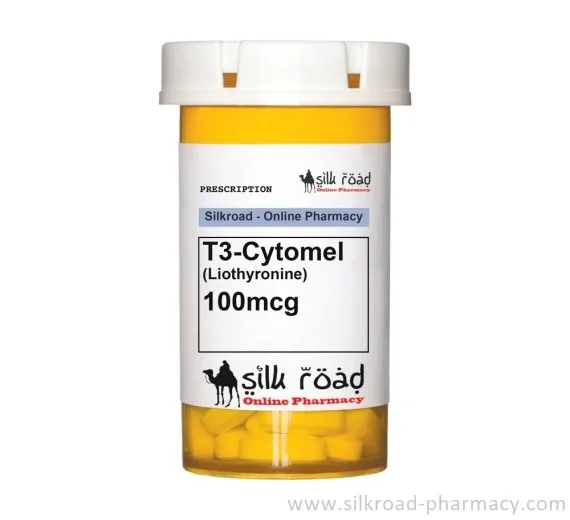
T3-Cytomel (Liothyronine) 100mcg tablets online
You can buy T3-Cytomel (Liothyronine) 100mcg tablets online from us. Silkroad Pharmacy is an online drugstore with the sole purpose of prescription drug sale over the internet, so you may please check the external source (link below) for detailed clinical information (like it’s side effects, risks, dosage etc) about T3-Cytomel (Liothyronine) 100mcg.
Facts and pack options
- Price: $1.00
- Brand: LA Pharma
- Category: STEROIDS
Frequently Asked Questions
How is it different from levothyroxine (T4)?
Liothyronine is the active T3 hormone itself, so it works faster and wears off faster; levothyroxine (T4) is converted to T3 gradually and remains the standard first-choice treatment for most people.
Can it be used to lose weight?
No. The label carries a boxed warning against this: in people whose thyroid is normal it does not produce meaningful weight loss, and doses above normal requirements can cause serious, even life-threatening, toxicity.
Why do I need blood tests after dose changes?
The correct dose is judged by TSH and thyroid hormone levels together with symptoms; too little leaves hypothyroidism untreated and too much strains the heart and bones.
Can I buy T3-Cytomel (Liothyronine) 100mc online in the UK or Ireland?
Yes — Silk Road Pharmacy ships T3-Cytomel (Liothyronine) 100mc to the UK, Ireland and many other countries in plain, discreet packaging. Delivery times and the total cost, including shipping, are shown clearly before you pay.
Do I need a prescription for T3-Cytomel (Liothyronine) 100mc?
Yes. After you place your order, simply email us your prescription; our team verifies it before dispatch. This check keeps your treatment safe and legal, and it only takes a few minutes of your time.
I am pregnant or planning to be. What happens to my thyroid treatment?
Thyroid replacement must not be stopped in pregnancy, because the baby depends on maternal thyroid hormone, especially early on. Levothyroxine is the standard treatment in pregnancy and dose requirements usually rise, with more frequent blood testing. If you take liothyronine, tell your doctor as soon as pregnancy is possible: the treatment plan is usually reviewed and often switched.
When will I see the delivery time and the total cost?
Before you pay. The delivery times for your country and the full total cost, including shipping, are shown clearly at checkout, so there are no surprises after you order.
What is the adrenal warning attached to thyroid hormones?
Thyroid hormone speeds up the body's handling of cortisol. In someone whose adrenal glands cannot make enough cortisol, starting thyroid replacement first can tip them into an adrenal crisis, a serious emergency. For that reason uncorrected adrenal insufficiency must be treated before thyroid hormone is begun. It is one of the few absolute sequencing rules in hormone replacement.
Can too much liothyronine harm my bones?
Yes, over time. Thyroid hormone in excess accelerates bone turnover, and long-term over-replacement is associated with reduced bone density and increased fracture risk, particularly in postmenopausal women. This is a central reason doses are titrated against TSH blood tests rather than symptoms alone: feeling energetic is not proof the dose is right for your skeleton.
I take insulin. Will starting liothyronine change my diabetes control?
It may. Beginning thyroid replacement increases the body's metabolic rate and can raise insulin and oral diabetes medicine requirements as hypothyroidism corrects. The label advises closer glucose monitoring when treatment starts or doses change. Discuss any persistent drift in readings with your diabetes team rather than letting control quietly deteriorate in either direction.
Does liothyronine make warfarin stronger?
Yes. As thyroid status corrects, the body's breakdown of clotting factors speeds up and the effect of oral anticoagulants such as warfarin increases, so bleeding risk rises and the warfarin dose may need reducing. Clotting tests should be monitored when thyroid treatment starts or changes. Tell the anticoagulation clinic about any dose adjustment promptly.
Can I pay for T3-Cytomel (Liothyronine) 100mc with Bitcoin?
Yes — Bitcoin is accepted alongside the other payment options shown at checkout, and many customers prefer it for the privacy it gives. Your order is prepared once the payment is confirmed.
International delivery
We ship T3-Cytomel (Liothyronine) 100mc to the USA, the UK, Australia, Ireland and Denmark and to many other destinations worldwide. Packaging is plain and discreet, and the exact delivery time and total price for your country are confirmed at checkout, before you pay.





0 reviews for T3-Cytomel (Liothyronine) 100mc
No reviews yet. Be the first to review this product!
Add Review