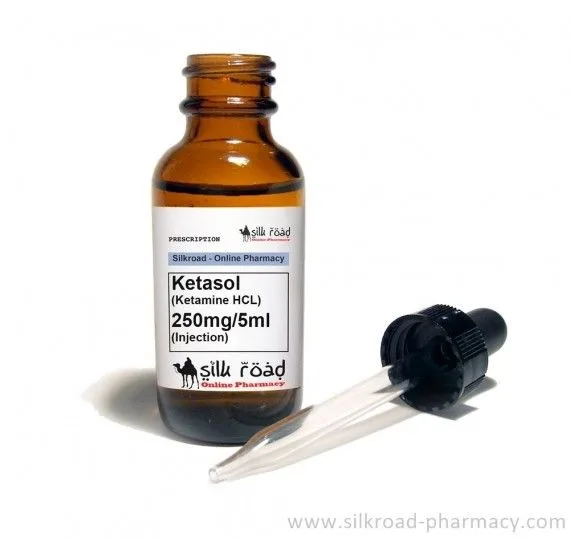

Description
Single procedures, repeat exposure and ketamine's longer-term profile
Used as intended — a dose or a few doses for a procedure — ketamine has a long safety record stretching back decades. Its well-publicised harms cluster around a different pattern: frequent, repeated exposure, usually non-medical, which is associated with tolerance, dependence, memory difficulties and a characteristic bladder injury that can become severe. This distinction matters for patients: one supervised anaesthetic should not be a source of lasting anxiety, while anyone receiving ketamine repeatedly within a treatment programme deserves monitoring of urinary symptoms and cognition as part of that programme. Tolerance can also develop with repeated anaesthesia, meaning later procedures may need dose adjustment — another reason your anaesthetic history is worth recording accurately. As with every medicine on this page, the preparation supplied for clinical use is given by trained staff in monitored settings; ketamine has no self-administered form, and treatment decisions rest entirely with the anaesthesia team.
Ketamine alongside other medicines: combinations the team manages
Ketamine is seldom the only drug in an anaesthetic, and managing its combinations is core anaesthetic work. Benzodiazepines and propofol are frequent partners — they smooth induction and reduce emergence reactions, at the price of deeper sedation and more breathing suppression than ketamine alone would cause. Opioids add pain relief but the same respiratory caution applies, and alcohol or sedatives taken beforehand compound everything, which is why honesty about them matters. Two specific interactions deserve names. Theophylline and aminophylline, used for airways disease, can lower the seizure threshold with ketamine and their combined use is advised against on the label. Sympathomimetic medicines and vasopressin can amplify ketamine's raising of heart rate and blood pressure. None of these are reasons for patients to adjust their own medicines; they are reasons the pre-assessment asks for a complete list, and why taking anything extra on the day without telling the team is genuinely risky.
Ketasol (ketamine) vial strengths and how the anaesthetist chooses
Ketasol supplies ketamine as a sterile solution in vials, in concentrations such as 10 mg per mL, 50 mg per mL and 100 mg per mL. The concentration is not a measure of quality — it is a practical choice the anaesthesia team makes around your weight, the route planned and the procedure ahead. Ketamine dosing is calculated per kilogram of body weight, and intravenous induction typically uses a lower amount per kilogram than intramuscular injection, where a larger dose is needed because absorption is slower. A dilute 10 mg per mL vial allows very precise, gradual intravenous titration and suits infusions and smaller patients, while concentrated vials keep the injected volume small when ketamine is given into a muscle. Vials are drawn up for a single patient and procedure, so there is no home pack: the amount used, the route and your responses are written into the anaesthetic record. Knowing the concentration used — and that it differs between vials — also explains why the team checks the label carefully before every dose, a routine worth welcoming rather than questioning.
Buy (Ketamine HCL) 250mg/5ml vial (1 Box = 5 Ampoules)
How it works
Ketamine induces sedation, immobility, amnesia and marked analgesia. The anaesthetic state produced by ketamine has been termed “dissociative anaesthesia” in that it appears to selectively interrupt association pathways of the brain before producing somesthetic sensory blockade. It may selectively depress the thalamoneocortical system before significantly obtunding the more ancient cerebral centres and pathways (reticular-activating and limbic systems). Numerous theories have been proposed to explain the effects of ketamine, including binding to N-methyl-D-aspartate (NMDA) receptors in the CNS, interactions with opiate receptors at central and spinal sites and interaction with norepinephrine, serotonin and muscarinic cholinergic receptors. The activity on NMDA receptors may be responsible for the analgesic as well as psychiatric (psychosis) effects of ketamine. Ketamine has sympathomimetic activity resulting in tachycardia, hypertension, increased myocardial and cerebral oxygen consumption, increased cerebral blood flow and increased intracranial and intraocular pressure. Ketamine is also a potent bronchodilator. Clinical effects observed following ketamine administration include increased blood pressure, increased muscle tone (may resemble catatonia), opening of eyes (usually accompanied by nystagmus) and increased myocardial oxygen consumption.
Usage And Safety
Dosage
Ketamine Hydrochloride
Side Effects
• Hallucinations (which may include flashbacks or floating sensation), vivid dreams, nightmares, feeling ill at ease, confused, anxious and irrational behaviour. • Unusual eye movements, increased muscle tone and muscle twitches (which may resemble ‘fits’ or convulsions) , • Double vision. • Increased blood pressure and increased pulse rate • Breathing more quickly. • Nausea, vomiting. • Skin inflammation/rash.
Drug Interactions
Barbiturates or narcotics (morphine-like drugs ) , atracurium and tubocurarine , halogenated anaesthetics , phenothiazines , sedating antihistamines , anxiolytics, sedatives and hypnotics , ‘Z-drugs’ (e.g.zolpidem , barbiturates (e.g. phenobarbital) , thyroid hormones (medicines like thyroxine), Diazepam , sympathomimetics (for example adrenaline or noradrenaline) or vasopressin , ergometrine , theophylline oraminophylline
Indication
It is used to put you to sleep during an operation. Ketamine may be used in both routine and emergency surgery.
When not to Use
Do not use Ketamine: • If you are allergic to ketamine hydrochloride or any of the other ingredients of this medicine . • If you are suffering from any condition in which an increase in blood pressure may be harmful to you or have suffered in the past from a medical condition which may have been caused/made worse by an increase in blood pressure. • If you have been pregnant and during your pregnancy you have suffered from a condition called eclampsia or pre-eclampsia which causes an increase in your blood pressure.
Precautions
Precaution
To be used only in hospitals by or under the supervision of experienced medically qualified anaesthetists except under emergency conditions.
Warnings
Warning 1
Respiratory depression may occur with overdosage of Ketamine, in which case supportive ventilation should be employed. Mechanical support of respiration is preferred to the administration of analeptics.
Warning 2
The intravenous dose should be administered over a period of 60 seconds. More rapid administration may result in transient respiratory depression or apnoea and enhanced pressor response.
Warning 3
Because pharyngeal and laryngeal reflexes usually remain active, mechanical stimulation of the pharynx should be avoided unless muscle relaxants, with proper attention to respiration, are used.
Additional Information
Pregnancy category
Always consult your physician before using any medicine.
Storage (YES/NO)
Store this medicine at room temperature, away from direct light and heat.
See more in the PAIN KILLERS range.
What Ketasol (Ketamine HCL) 250mg/5ml injection treats
The main uses of Ketasol (Ketamine HCL) 250mg/5ml injection are:
- Sole anesthetic agent for diagnostic and surgical procedures that do not require skeletal muscle relaxation
- Induction of general anesthesia before other anesthetic agents
- Supplement to other general anesthetics
How Ketasol (Ketamine HCL) 250mg/5ml injection works
Ketamine is a dissociative anesthetic that blocks NMDA receptors in the brain, disconnecting the mind's perception from the environment and producing a trance-like state with profound pain relief and amnesia. Unlike most anesthetics it usually maintains breathing reflexes and stimulates heart rate and blood pressure. It is given only by trained professionals in monitored settings.
Interactions with other medicines
Ketasol (Ketamine HCL) 250mg/5ml injection can interact with some other treatments, including: Opioid analgesics, benzodiazepines, and other CNS depressants including alcohol; Theophylline or aminophylline (may lower seizure threshold — co-administration is advised against); Other anesthetic and sedative agents; Sympathomimetic medicines and vasopressin (increased cardiovascular effects). Tell your prescriber about everything you take, including over-the-counter products and supplements, before starting.
Frequently asked questions about Ketasol (Ketamine HCL) 250mg/5ml injection
What does 'dissociative anesthesia' mean?
It describes a state in which the brain's perception is disconnected from pain and surroundings: the patient appears awake-eyed yet is profoundly anesthetized, with strong pain relief and usually preserved breathing reflexes.
What are emergence reactions?
As ketamine wears off, some patients experience dream-like states, vivid imagery, hallucinations, confusion, or agitation for a few hours. Keeping the recovery area quiet with minimal stimulation reduces them, and sedatives are sometimes given alongside.
Is injectable ketamine the same as the nasal spray used for depression?
No. The nasal spray product contains esketamine, one mirror-image half of the ketamine molecule, and is a separate medicine with its own approvals and controls. The injection covered here is a general anesthetic used for procedures and surgery.
Can I buy Ketasol (Ketamine HCL) 250mg/5ml injection online in Australia or Denmark?
Yes — Silk Road Pharmacy ships Ketasol (Ketamine HCL) 250mg/5ml injection to Australia, Denmark and many other countries in plain, discreet packaging. Delivery times and the total cost, including shipping, are shown clearly before you pay.
Do I need a prescription for Ketasol (Ketamine HCL) 250mg/5ml injection?
Yes. After you place your order, simply email us your prescription; our team verifies it before dispatch. This check keeps your treatment safe and legal, and it only takes a few minutes of your time.
Can ketamine be given together with other anaesthetics?
Yes, routinely. It is used to start anaesthesia before other agents, and as a supplement within balanced techniques. Sedatives such as midazolam are often combined with it, partly because they soften emergence reactions. Every addition changes the monitoring plan, which the anaesthesia team designs as a whole.
Do you deliver Ketasol (Ketamine HCL) 250mg/5ml injection to my country?
Silk Road Pharmacy ships to the USA, the UK, Australia, Ireland, Denmark and many other countries. The delivery options and times for your address are shown at checkout before you pay.
Which of my regular medicines matter most to the anaesthesia team?
Tell them everything, but flag a few specifically: theophylline or aminophylline for asthma can lower the seizure threshold alongside ketamine, and their combined use is advised against. Sedatives, opioids and blood-pressure medicines also shape dosing. Bringing an up-to-date medication list to the pre-assessment is the simplest safeguard.
Can a single ketamine anaesthetic damage my bladder?
Bladder and urinary tract damage is linked to chronic, repeated exposure — typically frequent non-medical use over months — not to one supervised anaesthetic dose. If you ever receive ketamine repeatedly as part of treatment, urinary symptoms such as pain, urgency or blood in the urine should be reported promptly.
Why might ketamine not be suitable for someone with psychosis?
Ketamine temporarily alters perception and thought processing, and it can intensify symptoms in people with schizophrenia or similar conditions. Anaesthetists therefore treat a history of psychosis as a strong caution and usually choose a different technique, unless the balance of risks in an emergency points the other way.
Will I be completely unconscious with ketamine?
Not in the way general anaesthesia is usually pictured. Ketamine produces a dissociative state: you are profoundly unaware of the procedure and feel no pain, yet your eyes may be open and your muscles retain tone. Breathing and protective reflexes are usually better preserved than with other anaesthetics.
Is my personal information kept private?
Yes. Your details are used only to process and deliver your order, your parcel is plain and discreet, and we never put anything on the packaging that reveals what is inside.
See also: customers also look at Feldene (Piroxicam) 20mg capsule.

0 reviews for Ketasol (Ketamine HCL) 250mg/5ml injection
No reviews yet. Be the first to review this product!
Add Review